How to Get Cheap Superbike Insurance — 7 Tips That Actually Work
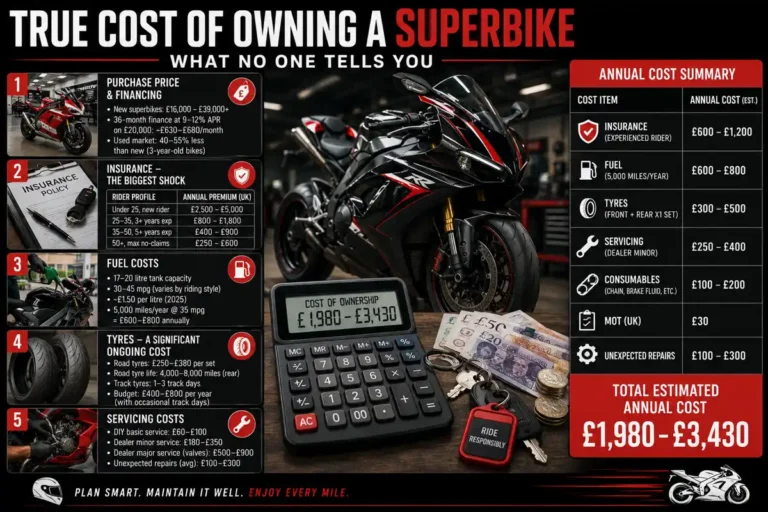
Superbike insurance is one of the most significant running costs of ownership. For younger or less experienced riders, premiums can exceed the annual cost of the bike itself. But many riders overpay because they do not know what insurers look at — or what they can do to influence it. These seven tips are practical, specific, and proven to reduce your premium. Some can be applied immediately before your next renewal.
Why Is Superbike Insurance So Expensive?
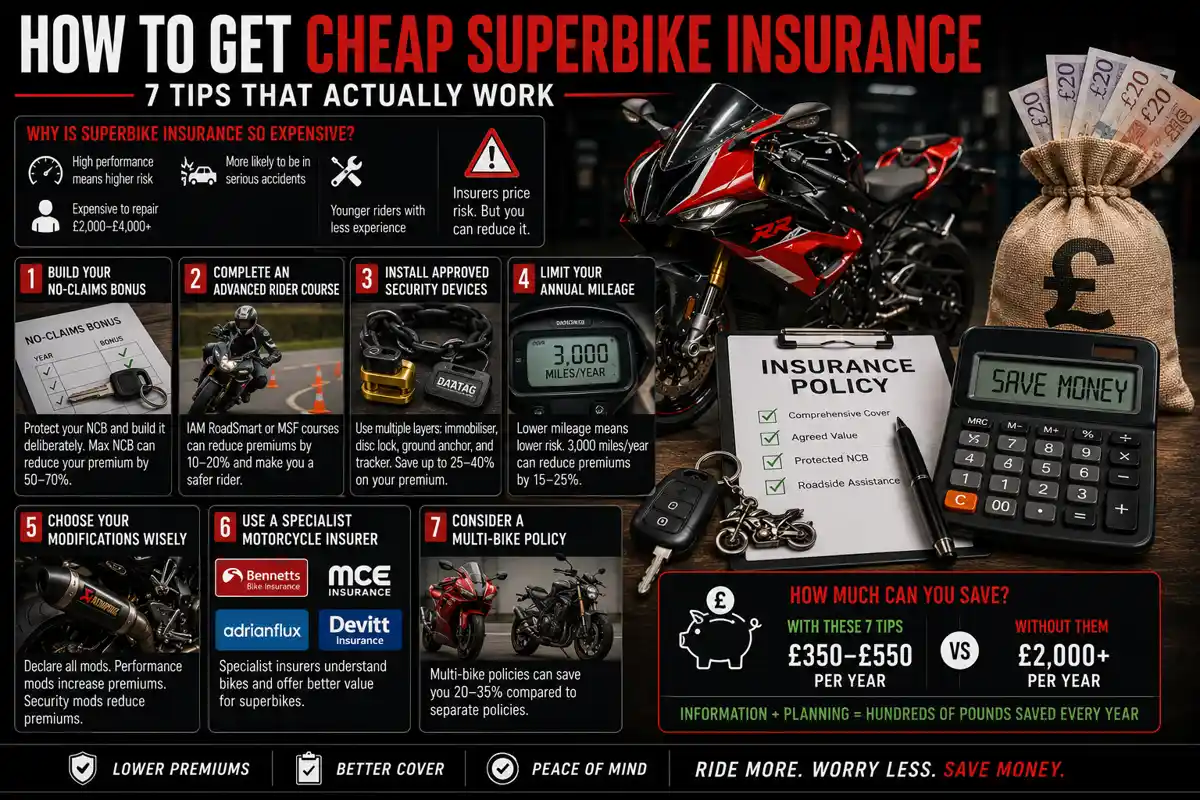
Insurers price risk. Superbikes are faster, more powerful, and statistically more likely to be involved in serious accidents than other vehicle categories. They are also expensive to repair — a simple tip-over at low speed can result in £2,000–£4,000 of fairing and brake damage. Combined with the demographics of typical superbike riders (often younger, male, with limited experience), this creates a high-risk profile that commands high premiums. However, every one of these risk factors can be influenced.
Tip 1 — Build Your No-Claims Bonus (NCB) Deliberately
A maximum no-claims bonus can reduce your premium by 50–70%. If you are a new rider, consider starting on a smaller, cheaper bike to build your NCB over 2–3 years before stepping up to a superbike. Some insurers also offer NCB protection — for a small additional premium, your discount is preserved even after a claim.
Tip 2 — Complete an Advanced Rider Course
Advanced rider qualifications — such as the IAM RoadSmart qualification (UK) or the MSF RiderCoach program (US) — are recognised by many insurers as evidence of reduced risk. They typically reduce premiums by 10–20%. The cost of the course (£150–£300) is recovered within the first year of reduced premiums in most cases. It also genuinely makes you a better, safer rider.
Tip 3 — Install Approved Security Devices
Superbike theft is a significant risk that insurers price into your premium. Fitting one or more of the following approved security measures can meaningfully reduce your costs:
- Datatag or Datatool immobiliser system
- Sold Secure Gold-rated disc lock and chain
- Ground anchor in a locked garage
- Tracker (Vodafone, Monimoto, or Datatool T4)
Insurers reward multiple layers of security. A bike stored in a locked garage with a ground anchor, immobiliser, and approved tracker can attract premiums 25–40% lower than the same bike kept on a driveway with no security.
Tip 4 — Limit Your Annual Mileage
Lower annual mileage means lower statistical exposure to accidents. If you ride your superbike primarily for weekend pleasure riding and occasional track days rather than commuting, declare this honestly and limit your policy mileage accordingly. Stepping from unlimited mileage to 3,000 miles per year can reduce premiums by 15–25%.
Tip 5 — Choose Your Modifications Wisely
Modifications are a complex area. Some modifications increase premiums; others can reduce them. Always declare modifications to your insurer — failure to do so can void your policy. Performance modifications (ECU remap, larger exhaust, suspension upgrades) generally increase premiums. Aesthetic modifications (different colour bodywork, custom paint) may increase replacement costs. Security modifications (immobilisers, trackers) reduce premiums. When modifying your bike, weigh the insurance impact against the performance or aesthetic benefit.
Tip 6 — Use a Specialist Motorcycle Insurer
Generic comparison sites often return higher prices for superbikes because mainstream insurers are not specialists. Use specialist motorcycle insurers who understand the risk profile and price accordingly. In the UK, the following are well-regarded for superbike coverage:
- Bennetts Bike Insurance — consistently competitive for litre bikes
- MCE Insurance — good for modified bikes
- Adrian Flux — strong for older or imported models
- Devitt Insurance — excellent multi-bike policies
In the US, progressive Motorcycle Insurance and Markel Insurance are well-regarded specialists.
Tip 7 — Consider a Multi-Bike Policy
If you own more than one motorcycle — or ride both a superbike and a smaller commuter — a multi-bike policy almost always provides better value than two separate policies. Many specialist insurers offer multi-bike cover that groups your bikes together under a single policy, typically saving 20–35% versus insuring each bike individually.
Summary — How Much Can You Save?
Applying all seven tips above to a realistic scenario: an experienced rider (35 years old, 5 years NCB, IAM advanced qualification, fitted tracker and disc lock, garage stored, 3,000 miles annual limit, specialist insurer) can expect to pay £350–£550 per year for comprehensive superbike insurance. Compare that to a younger, less experienced rider on a comparison site paying £2,000+ for the same bike. The difference is information and planning. Apply these tips, and you will genuinely save hundreds of pounds every year.