Best Motorcycle Helmets for Superbike Riders
Your helmet is the single most important piece of equipment you own as a motorcyclist. It is the last line of defence between your head and the road. For a superbike rider travelling at speeds that make other traffic invisible, the helmet you choose matters enormously — not just in terms of safety certification, but aerodynamics at high speed, visor quality, weight, ventilation, and noise attenuation. Here are the five best helmets for superbike riders
What to Look for in a Superbike Helmet
Before choosing a helmet, understand these key criteria:
- Safety certification: ECE 22.06 is the current European standard. SNELL SA2025 is the American racing standard. DOT is the minimum US road requirement. Always choose ECE 22.06 or SNELL certified.
- Aerodynamics: At superbike speeds (180+ km/h), a poorly designed helmet creates significant lift and buffeting. Look for helmets with integrated spoilers and aerodynamic shells.
- Weight: Lighter helmets (under 1,400 g) reduce neck strain on long rides and during aggressive cornering.
- Ventilation: A well-ventilated helmet prevents fogging and maintains comfort on track.
Fit: Nothing overrides fit. A helmet that fits perfectly and is certified to ECE 22.06 is better than an expensive helmet that moves on your head
Top 5 Helmets for Superbike Riders
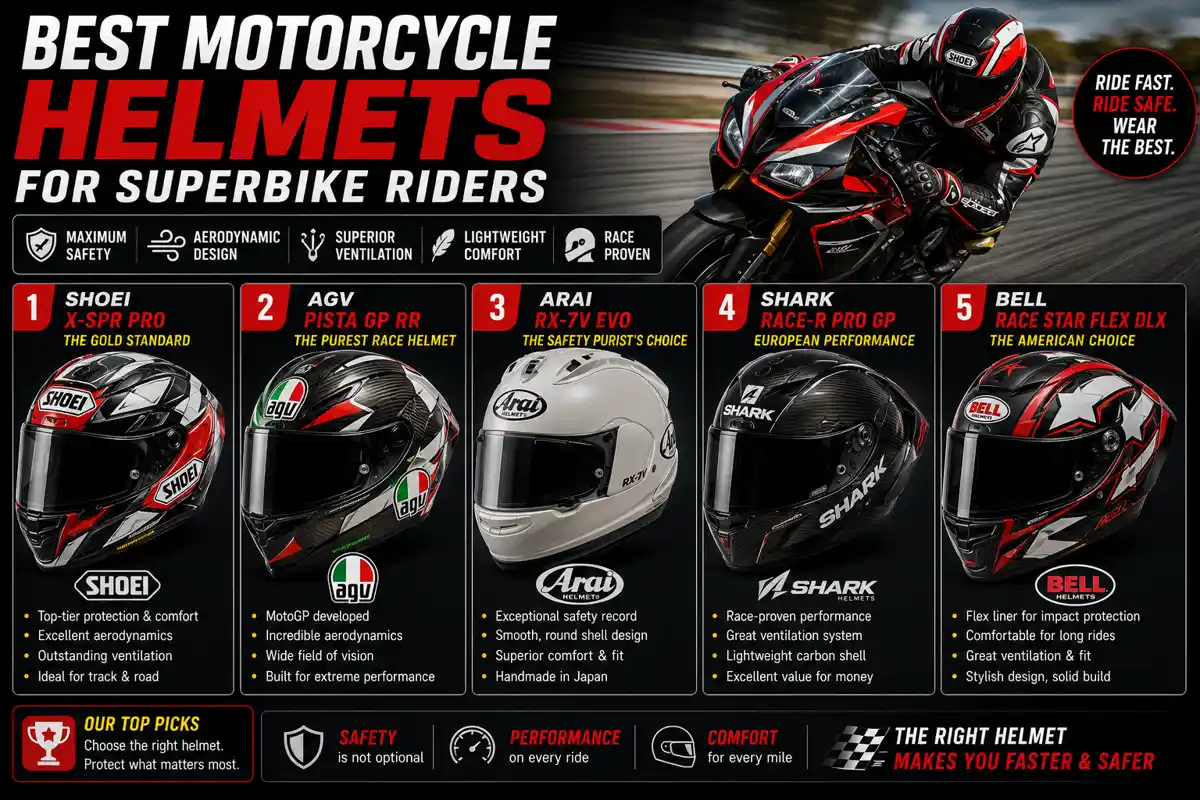
1. Shoei X-SPR Pro — The Gold Standard
The Shoei X-SPR Pro is the helmet chosen by more MotoGP and WorldSBK riders than any other. It features a multi-layer fibreglass composite shell, an Integrated Aero Stabiliser that prevents lift at high speeds, and an exceptionally wide field of vision through the CWR-F2 visor. Interior comfort is superb — the 3D Max-Dry liner wicks moisture and provides a snug, secure fit across a wide range of head shapes.
- Safety: ECE 22.06 / FIM
- Weight: ~1,490 g
- Price: £620–£750
- Rating: 10/10
2. AGV Pista GP RR — The Purest Race Helmet
The AGV Pista GP RR is what Valentino Rossi, Marco Bezzecchi, and other factory MotoGP riders wear at race speed. Its full carbon fibre shell (IFC — Integrated Fibreglass Construction) weighs just 1,350 g — among the lightest road-legal race helmets available. The ventilation system is exceptional, featuring an aggressive open-air chin intake and top vents that create a genuine airflow through the interior. The racing aesthetic is unmistakable.
- Safety: ECE 22.06 / FIM Homologated
- Weight: ~1,350 g
- Price: £700–£900
- Rating: 9.5/10
3. Arai RX-7V Evo — The Safety Purist’s Choice
Arai are unique in the helmet world — every helmet is still hand-assembled in Japan, and the company’s philosophy prioritises glancing blow deflection above all else. The RX-7V Evo uses a complex multi-layer fibreglass laminate shell specifically engineered to deflect impacts rather than absorb them in place. The result is consistently exceptional performance in independent safety tests. The interior comfort is also outstanding.
- Safety: ECE 22.06 / Snell M2020
- Weight: ~1,450 g
- Price: £650–£800
- Rating: 9.5/10
4. Shark Race-R Pro GP — European Performance
Shark’s Race-R Pro GP offers genuine race-level performance at a slightly lower price than the Shoei and AGV flagships. The full carbon shell is among the lightest in its class, and the aerodynamic package has been developed with factory Moto2 and WorldSBK teams. The Pinlock Max Vision visor system is particularly impressive — excellent visibility with no fogging even in cold conditions.
- Safety: ECE 22.06
- Weight: ~1,280 g (carbon version)
- Price: £500–£700
- Rating: 9/10
5. Bell Race Star Flex DLX — The American Choice
For riders in the US market, the Bell Race Star Flex DLX provides an exceptional combination of safety certification (both DOT and ECE), comfort, and aerodynamics at a competitive price point. The FLEX technology within the EPS liner provides superior energy management in low-velocity impacts. The wide eyeport and aggressive chin bar give it a genuinely race-bred appearance.
- Safety: DOT / ECE 22.05
- Weight: ~1,500 g
- Price: £380–£480
- Rating: 8.5/10
Safety Ratings Explained
| Standard | Description | Region |
| ECE 22.06 | Current European standard (2022). Most comprehensive testing including rotational forces | Europe, Global |
| SNELL M2020 | Independent US testing institute. Stricter than DOT, widely respected | USA, Global |
| DOT FMVSS 218 | US minimum legal standard. Self-certified — less rigorous than ECE/SNELL | USA |
| FIM IRTA | Race-specific. Required for MotoGP/WorldSBK. Not road-legal in all regions | Race only |
Never compromise on your helmet. It is the most important safety investment you will make. Choose ECE 22.06 certified as a minimum, ensure the fit is correct (neither too tight nor too loose), and replace your helmet after any significant impact — even if no damage is visible.