Superbike Maintenance Checklist — 10 Things to Do Every 1,000 Miles
Owning a superbike is not just about riding — it is about maintaining a precision machine at the level it was engineered to perform. Neglect a superbike, and the consequences are not just mechanical failure but genuine safety risk. The good news is that with a disciplined maintenance schedule, a superbike will reward you with thousands of miles of exceptional performance. Here is the definitive 10-point checklist to follow every 1,000 miles.
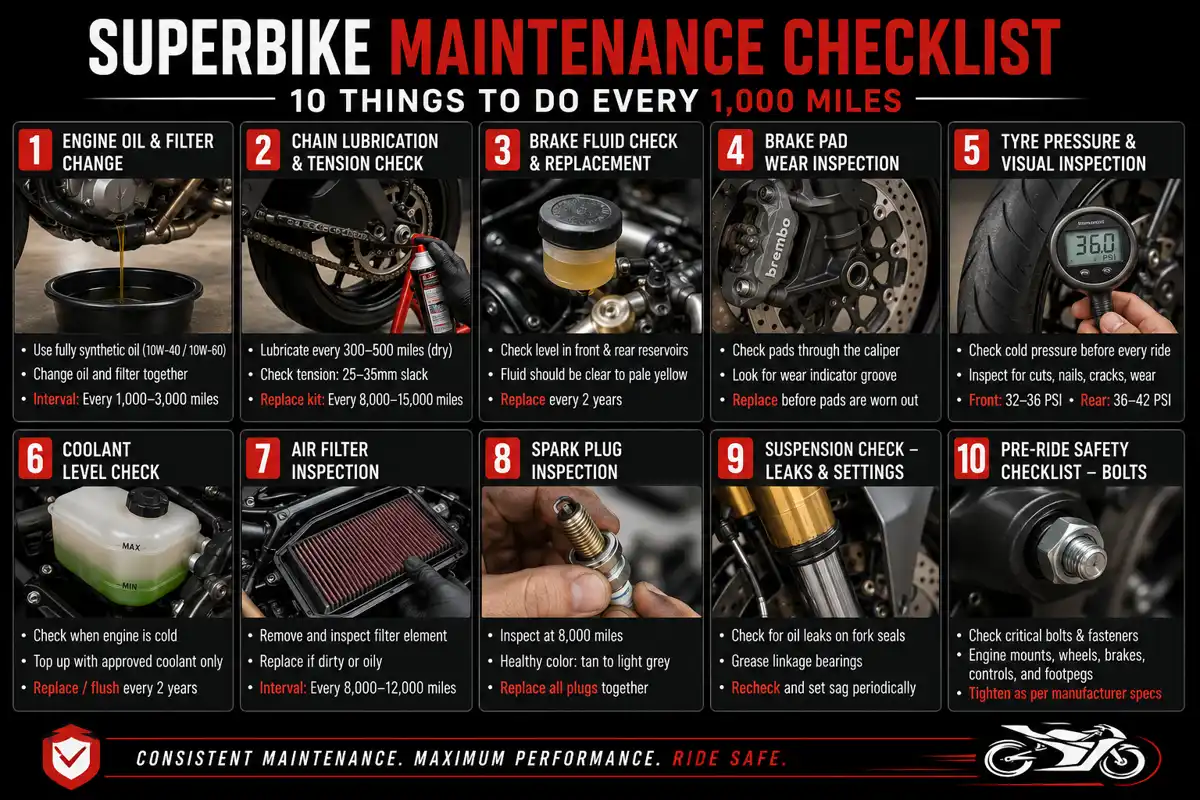
1. Engine Oil & Filter Change
Engine oil is the lifeblood of your superbike. At high RPM, oil degrades far faster than in a car engine. Use the manufacturer-specified fully synthetic oil — typically 10W-40 or 10W-60 for most superbikes. Change both the oil and the filter together. Do not reuse old filters. After draining, check that the sealing washer on the drain plug is in good condition and replace it if compressed or damaged.
- Recommended interval: Every 1,000–3,000 miles (check your specific model’s manual)
- Cost: £30–£60 for quality oil and filter
- Time required: 30–45 minutes
2. Chain Lubrication & Tension Check
The drive chain is one of the most frequently neglected components on a superbike. A dry, stretched, or poorly tensioned chain loses power, wears sprockets rapidly, and in extreme cases can snap — a catastrophic failure at speed. Lubricate the chain after every ride in wet conditions and every 300–500 miles in dry conditions. Check tension — most superbikes require 25–35mm of slack at the midpoint of the chain. Adjust via the rear axle adjusters if required.
- Recommended lube: Motul Chain Paste or DID Chain Lube
- Replace chain and sprockets: Every 8,000–15,000 miles depending on riding style
3. Brake Fluid Check & Replacement
Brake fluid is hygroscopic — it absorbs moisture from the atmosphere over time. As moisture content increases, the boiling point of the fluid drops, which can lead to brake fade at the worst possible moment — typically during hard braking at high speed on a track. Check the fluid level in both front and rear reservoirs. The fluid should be clear to pale yellow; if it is dark brown, replace it immediately. Even if it looks clean, replace brake fluid every two years minimum.
4. Brake Pad Wear Inspection
Visually inspect the brake pads through the caliper. Most pads have a wear indicator groove — when this groove is no longer visible, the pads must be replaced. Do not ride on worn pads. On a superbike, brake pad wear can be surprisingly rapid, particularly if you are doing track days. For track use, switch to sintered metallic pads for better performance and longer life at high temperatures.
5. Tyre Pressure & Visual Inspection
Tyre pressure has a larger effect on superbike handling than most riders realise. Incorrect pressure — even 3–4 PSI off the recommended setting — significantly affects cornering stability and tyre wear. Check cold tyre pressure before every ride using a quality digital gauge. Also inspect the tyre surface for embedded nails, cuts, unusual wear patterns, or cracking on the sidewalls. A superbike tyre showing cracking should be replaced immediately regardless of tread depth.
- Typical front pressure: 32–36 PSI (check model specific)
- Typical rear pressure: 36–42 PSI (check model specific)
6. Coolant Level Check
Check the coolant reservoir level when the engine is cold. The level should sit between the MIN and MAX marks. Top up only with the manufacturer-approved coolant — never plain water. Flush and replace coolant every 2 years, as it degrades and loses its anti-corrosion properties over time, which can damage aluminium engine components.
7. Air Filter Inspection
A clogged air filter restricts airflow to the engine, reducing power and increasing fuel consumption. On most superbikes, the airbox is accessible by removing the fuel tank or side fairings. Remove the filter element and inspect it. If it is visibly dirty or oily, replace it. For track bikes, a performance filter (K&N or similar) can improve airflow while still providing effective filtration.
- Replacement interval: Every 8,000–12,000 miles or annually
8. Spark Plug Inspection
Spark plugs on modern superbikes last longer than older designs — typically 12,000–16,000 miles. However, inspecting them at 8,000 miles is worthwhile. A healthy spark plug electrode should be tan to light grey in colour. Black and sooty indicates a rich fuel mixture or oil burning. White or blistered indicates a dangerously lean mixture or overheating. Replace all plugs together.
9. Suspension Check — Leaks & Settings
Inspect the front fork legs for oil seeping past the dust seals — this indicates worn fork seals that must be replaced. A leaking fork loses damping ability and becomes a safety issue. Also check that the rear suspension linkage bearings are greased and functioning correctly. If you have adjustable suspension, periodically revisit your setup — sag settings drift over time as springs settle.
10. Pre-Ride Safety Checklist — BOLTS
Before every single ride, run through the BOLTS acronym:
- B — Brakes: Both front and rear working? Fluid levels correct?
- O — Oil: Engine oil level within range?
- L — Lights: All lights, indicators, and horn functioning?
- T — Tyres: Pressure correct? No visible damage?
- S — Steering: No stiffness, wobble, or unusual resistance?
A superbike maintained to this standard will not only be safer to ride — it will also hold its value significantly better when you come to sell it. Spend 20 minutes in the garage now to avoid spending thousands at a dealership later.